
Apex.AI
Enables AI and autonomy in various industries.
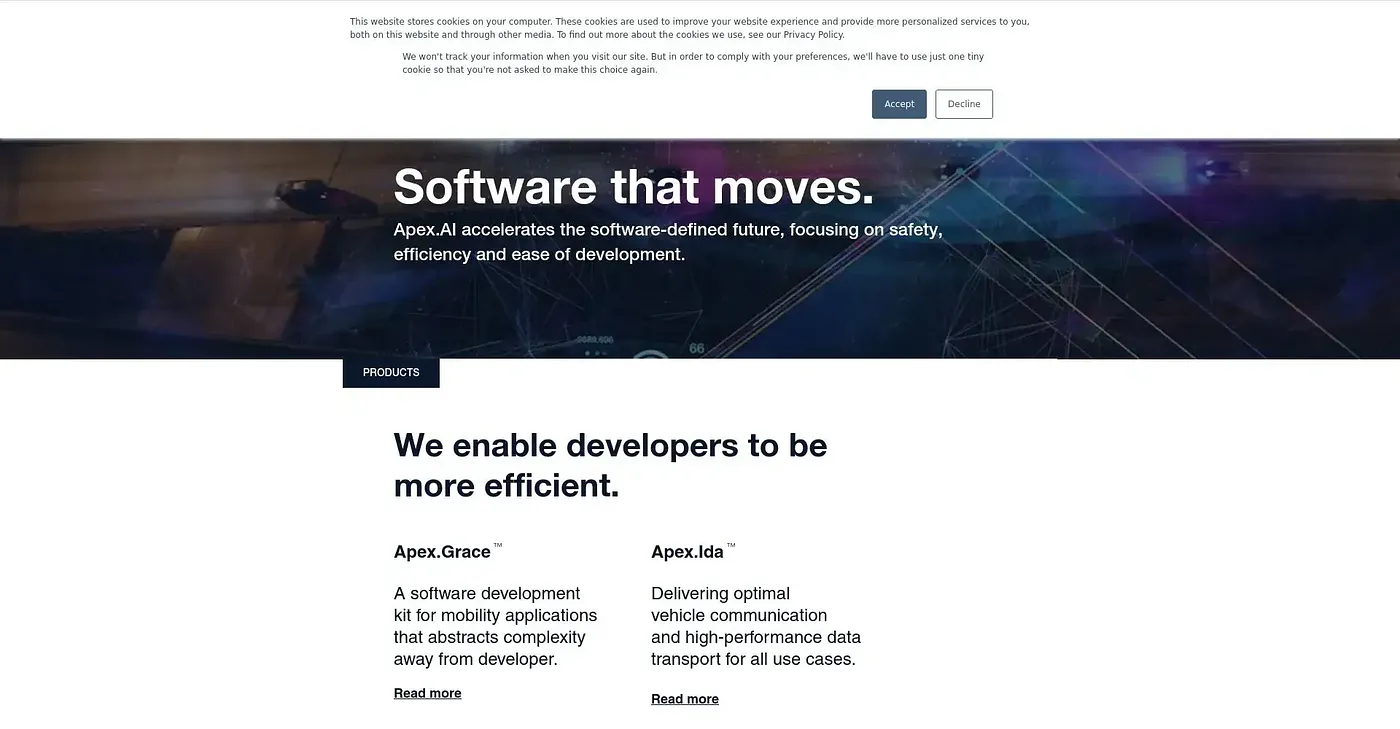
At a glance
3.7 out of 5
Scored by Alex after real useOur verdict
Apex.AI excels at AI and autonomy but lacks cloud services. Consider for embedded systems only if you don't need the cloud.
✓What it does well
✕Where it falls short
Key features
Questions about Apex.AI
What does Apex.AI do?
Apex.AI enables AI and autonomy across industries, supporting AI-native systems while keeping the underlying software foundation consistent throughout development. It provides high-speed, fault-tolerant middleware for data flow, a data recording and replay system for verification and validation, and automated tools for development and CI/CD workflows.
Which industries is Apex.AI built for?
Toolio lists defense, automotive and agriculture as the best fit for Apex.AI. Its modular defense architecture allows different vehicle platforms and sensors to be combined easily, and the reviewer suggests it for embedded systems when the cloud is not needed.
Does Apex.AI offer cloud services?
No. Apex.AI does not offer cloud-native services or ROS 2 migration support, which the reviewer lists as a shortcoming. The verdict recommends it for embedded systems only when the cloud is not needed.
What are the downsides of Apex.AI?
Apex.AI charges extra for embedded software development and CI/CD pipeline implementation, which adds to setup costs. It also has a smaller community than mainstream cloud platforms. The reviewer still credits its AI-native systems and consistent software foundation.
How does Toolio rate Apex.AI?
Apex.AI scores 3.7 out of 5 on Toolio, scored by Alex after real use on 3 Oct 2026. The reviewer finds it excels at AI and autonomy but lacks cloud services. It runs on the web and has been listed since October 2024.