
Decypher
Learn about royal cyphers on post boxes in the UK.
At a glance
3.7 out of 5
Scored by Alex after real useOur verdict
Decypher is a great way to learn street-level history. It's perfect for those walking through London or other UK cities who want to explore their surroundings with an educational lens. However, it focuses narrowly on post boxes and does not offer broader historical context.
✓What it does well
✕Where it falls short
Key features
Questions about Decypher
What is Decypher?
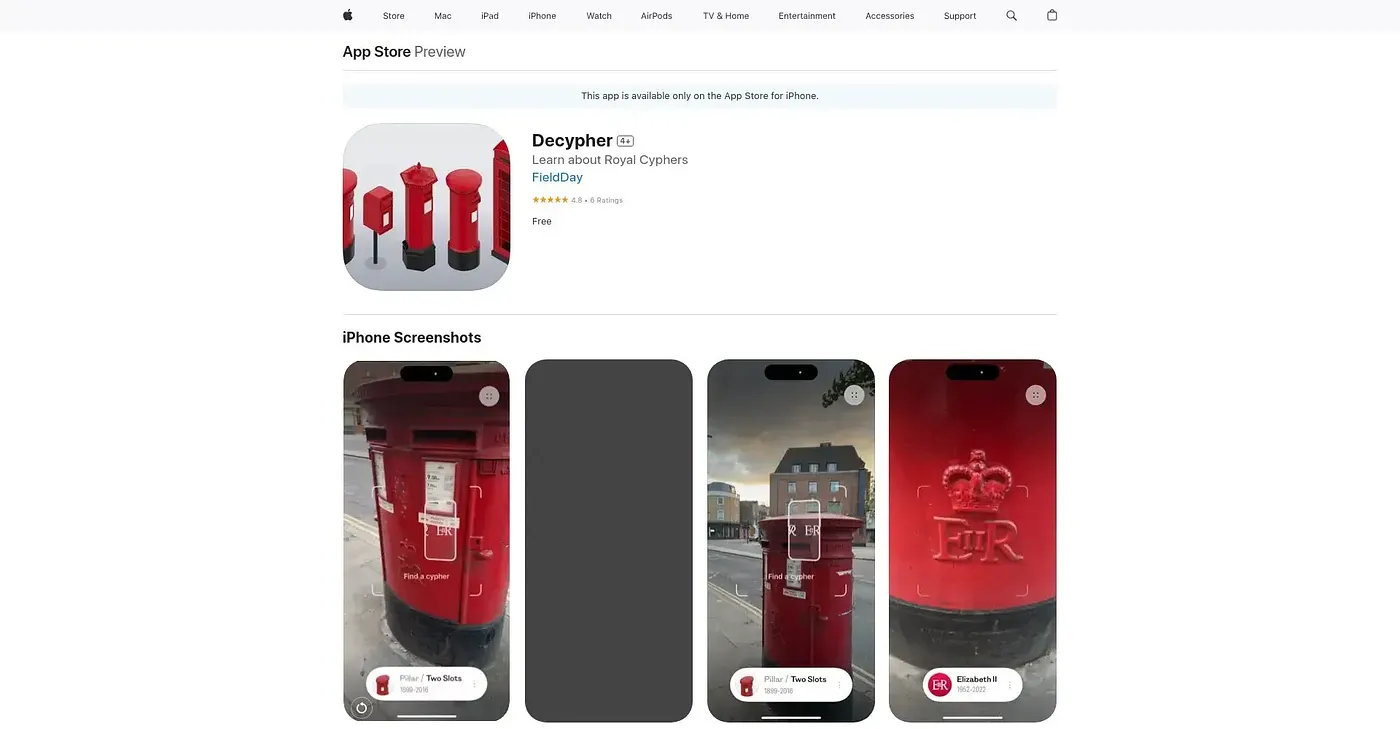
Decypher is an iPhone app that teaches the history of royal cyphers on post boxes in the UK. It uses the phone's camera to recognize post boxes and their cyphers, then gives background on the history of the cyphers and the local neighborhoods. The reviewer calls it a great way to learn street-level history.
Does Decypher work on older iPhones?
Yes. Decypher runs on iPhone, and the reviewer notes that it runs smoothly even on models from the iPhone XS onwards. The reviewer also praises its simple, intuitive interface, which makes it easy to interact with street furniture and learn about post boxes.
What are the limits of Decypher?
Decypher focuses only on UK post boxes and their royal cyphers, so it offers nothing on other street furniture or historical sites in general. The reviewer also notes that it lacks a wider historical narrative, and that recognition depends on good lighting and camera quality, with inconsistent results in poor conditions.
Who is Decypher for?
Decypher suits curious history enthusiasts and tourists, especially people walking through London or other UK cities who want to explore their surroundings with an educational lens. Toolio lists history buffs outside the UK as a poor fit, since the app covers only British post boxes and the cyphers on them.
How does Toolio rate Decypher?
Toolio scores Decypher 3.7 out of 5, a rating Alex gave on 4 Oct 2026 after real use. Alex values its camera-based identification of post boxes and its easy interface. The score also reflects its narrow focus on post boxes and the lack of broader historical context.