
EMA
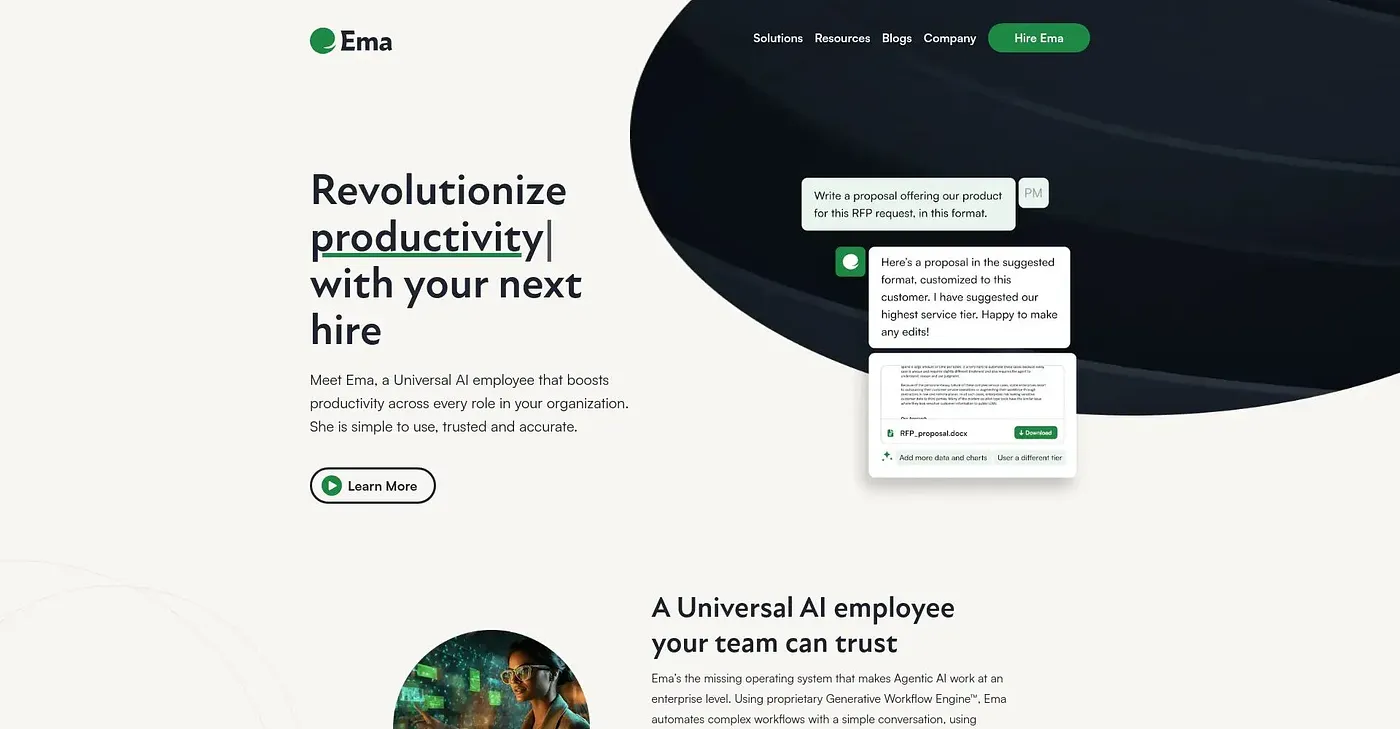
Deploys AI agents that automate HR, IT and finance busywork like onboarding and benefits.
At a glance
3.9 out of 5
Scored by Alex after real useOur verdict
Ema deploys AI agents across HR, IT and finance to handle routine work like recruiting, onboarding, benefits and performance reviews, connecting through more than 250 prebuilt integrations with tools like Teams and Slack. Enterprises consolidating multiple SaaS tools into one AI layer are the clear target audience. Deployment still needs configuration to fit a company's existing systems, and its scale and pricing model lean toward larger organizations rather than small teams.
✓What it does well
✕Where it falls short
Key features
Questions about EMA
What does EMA do?
EMA deploys AI agents that automate routine HR, IT and finance work, such as recruiting, onboarding, benefits and performance reviews. The reviewer describes it as a way for enterprises to consolidate multiple SaaS tools into one AI layer. It runs on the web and is listed on Toolio under team collaboration.
Does EMA work with Slack and Teams?
Yes. EMA plugs into Teams, Slack and voice channels that a company already uses, and it connects to existing enterprise systems through more than 250 prebuilt integrations. The reviewer counts these integrations among its main strengths, though getting full value still means configuring it to match a company's setup.
Is EMA free?
EMA has a free tier, listed at $0, and no paid plan was found on the vendor's site in September 2026. It runs on the web and has been listed on Toolio since August 2024.
Is EMA a good fit for small teams?
Not really. Toolio lists EMA as best for enterprises automating repetitive HR, IT and finance tasks, and not for small teams without the scale to justify an enterprise deployment. The reviewer adds that its scope leans toward larger organizations and that deployment needs configuration to fit existing systems.
How does Toolio rate EMA?
Alex scored EMA 3.9 out of 5 after real use on 3 Oct 2026. The reviewer credits its cross-department agents, its more than 250 prebuilt integrations and the way it works inside Teams and Slack. The main drawbacks are its enterprise focus and the configuration needed to fit existing systems.