Why Podcasters and YouTubers Are Handing First Cuts to AI Agents
Ask a podcaster or YouTuber which part of the job they like least, and you will hear the same answer again and again. It is not recording. It is not publishing. It is the stretch in the middle where you sit with a two-hour file and slowly work out what is worth keeping. That stretch is the first cut, and it is where a growing number of creators are handing the work to AI agents. This article looks at why the first cut is such a painful job, how agents take it on, and what creators still need to do themselves.
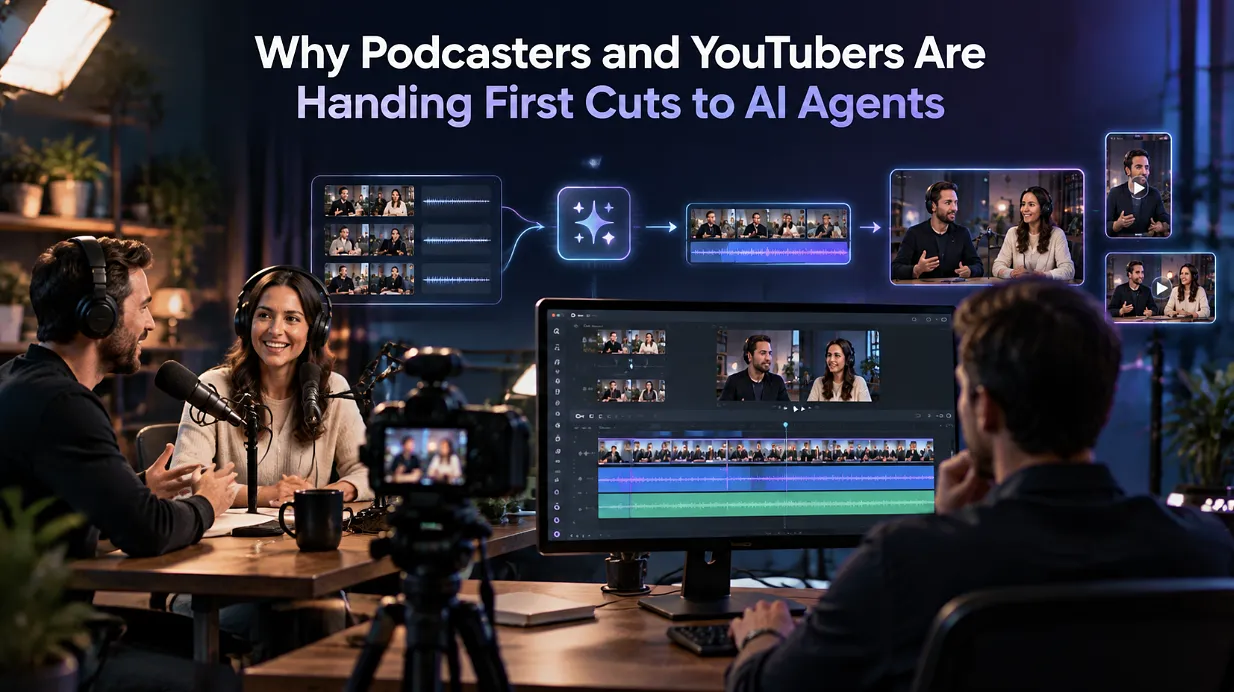
The Real Cost of a First Cut
A first cut is the earliest complete version of an episode. It is not polished, and it is not meant to be. Its job is to get the good material into the right order so the real editing can begin.
Getting there takes longer than most people expect. Someone has to watch or listen to everything, pick the best version of each answer, cut the false starts, trim the dead air, and stitch it into something that runs from start to finish. For a weekly show, that can eat an entire evening before a single creative decision gets made. Solo creators feel it most, because the person who recorded the episode is usually the same person editing it, and the backlog builds quickly.
What an AI Agent Does With Raw Footage
An AI editing agent is different from a filter or a preset. It reads the footage, works out what is being said, and carries out a task you describe in plain language. Ask for a clean base cut of an interview, and it reviews the material, chooses usable takes, removes the repetition, and lays the result onto a timeline.
The important part is that the timeline stays open. You are not handed a locked export. You get a working draft that you can inspect, move around, and take apart, which is why so many creators are comfortable letting an agent go first.
How Podcasters Are Using It
Podcast recordings are a natural fit because they are long, conversational, and full of small messes. Guests restart sentences, hosts circle back to a point, and there are pauses while someone finds a word.
Invideo editor handles this kind of recording by working out what was said, keeping each point once, and dropping the repeats, which is exactly the cleanup a podcast editor would otherwise do by hand. With a multicam video podcast, it can also sync the angles and build a layered cut, so the host does not have to line up three cameras before editing starts. What comes back is a full episode structure to react to, not a blank timeline.
How YouTubers Are Using It
YouTubers tend to record differently. They shoot several takes of the same line, drift off script, and collect extra footage to cut away to. A solo creator can easily end up with an hour of material for a ten-minute video.
In that situation invideo editor can build the base cut against a script if there is one, picking a single clean take for each line. Without a script, it can still work out the points you made and keep each one once. Creators then spend their time on the parts that give a video its personality, like pacing, jokes, and the moment a story lands, instead of on sorting takes.
Choosing an Editor Built for This
Not every editor that mentions AI is doing this kind of work. Some add captions and effects, and others still expect you to make every cut yourself. Invideo editor sits on the other side of that line, since it lets an agent do real work on a real timeline while you step in whenever you want.
The idea is easy to picture once you see it in action. invideo's agentic video editor has AI agents that watch the footage, work the timeline, and hand back a cut that stays yours. For a podcaster or YouTuber, that means you describe the cut you want, review what comes back, and keep editing from there, so you stay in charge of the story while the agent handles the grunt work.
How to Try It on Your Next Episode
The best way to judge any agent is to give it something difficult. Pick a recent recording that has repeated takes, awkward pauses, and a few mistakes, because clean single-take footage will make almost any editor look good.
Upload the footage, add a script or transcript if you have one, and describe the cut in a sentence or two, such as the topic you want covered and the order of the points. Invideo editor will then assemble a first version, and you can watch the whole thing once before touching anything. Note what it got right, what it cut too aggressively, and where it kept something you would have dropped. That tells you quickly whether the workflow fits your show.
Where Human Editors Still Matter
A first cut is a starting point, and treating it as a finished episode is the fastest way to publish something flat. An agent can find a pause, but it does not know whether that pause is awkward or the best moment in the conversation. It can spot a repeated answer without knowing which version sounds more honest.
Taste, humor, and judgment about what your audience wants all stay with you. The agents simply move you to those decisions faster. Creators who get the most from this approach usually review the draft closely, restore anything that was cut too hard, and then spend their saved hours on the things only they can do.
Conclusion
Podcasters and YouTubers are handing over first cuts because the job is slow, repetitive, and easy to describe in words, which is exactly the kind of work agents suit. The creative decisions still belong to the creator, and the timeline stays open so nothing is locked in.
If you have a backlog of raw recordings, try invideo editor on the messiest one and see how close the first draft gets. Even a rough result that saves you an evening is a good reason to keep testing.