
Dust
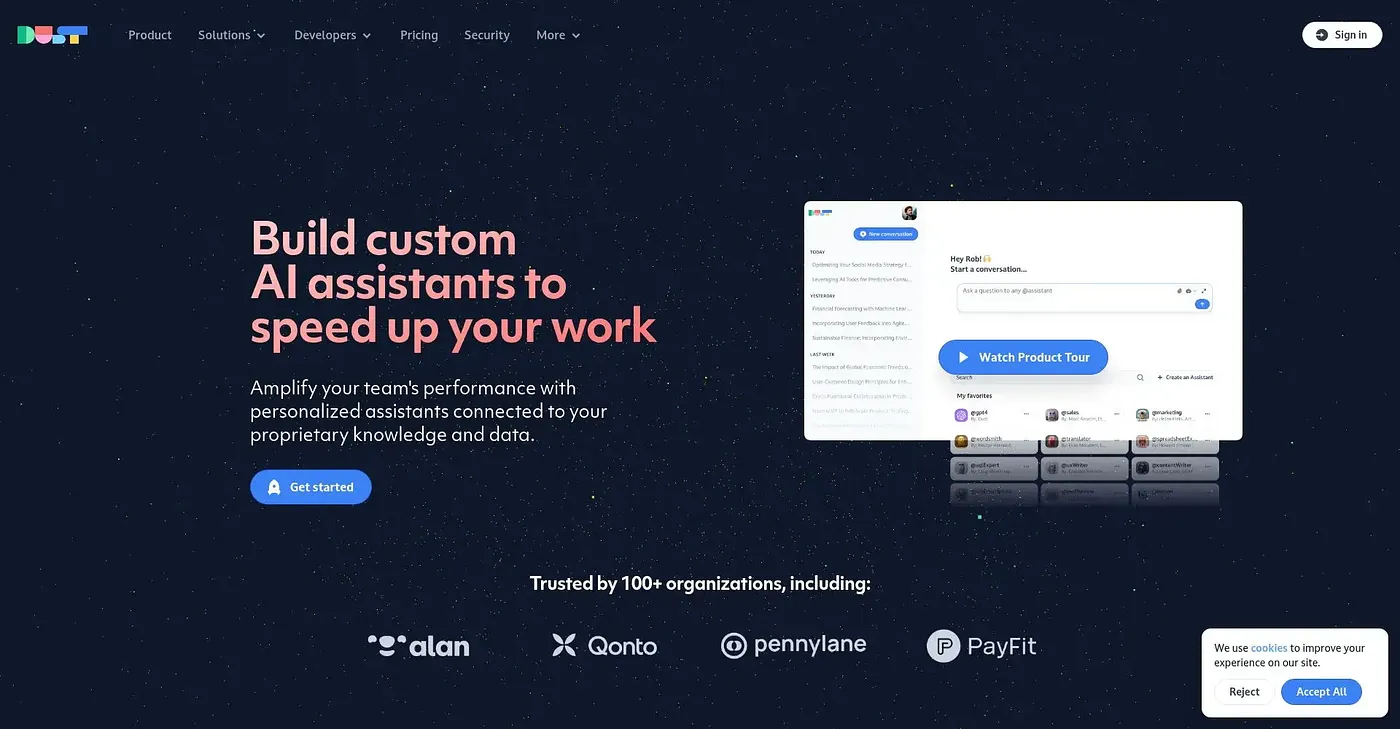
Dust connects company knowledge, tools, and teams for AI collaboration. Flexible models ensure work gets done.
At a glance
4.0 out of 5
Scored by Alex after real useOur verdict
Flexible enough to handle complex workflows but lacks simplicity; suitable for large enterprises with multiple data sources.
✓What it does well
✕Where it falls short
Key features
Questions about Dust
What is Dust?
Dust connects company knowledge, tools and teams for AI collaboration. Its agents bring in relevant context from various company systems, and it supports multi-agent workflows with triggers and schedules, a wide range of frontier models and over 70 integrations with different tools and systems.
Is Dust free?
Dust has a free tier with limited features at $0. The reviewer notes that costs scale steeply with enterprise plans, which include custom legal terms, and Toolio marks it as not for small teams with limited budgets.
Where does Dust store data?
Dust offers US and EU data residency options only, with no other geographic choices available, which the reviewer counts among its shortcomings. For security, it uses a dual-layer permission structure and provides detailed audit logs to monitor AI activity and usage.
Is Dust easy to use?
Not especially. The reviewer finds Dust flexible enough for complex workflows but lacking simplicity, with a steep learning curve that makes it less suitable for casual users or small teams. Toolio lists it as best for multi-disciplinary enterprise teams.
What are some alternatives to Dust?
Toolio lists Wrk, ShipFast, Stable Diffusion API and Ragie AI as alternatives to Dust. Wrk automates a described process with AI bots, and ShipFast is a NextJS boilerplate for SaaS and web apps. Alex scored Dust 4.0 out of 5 after real use.