
Parmonic
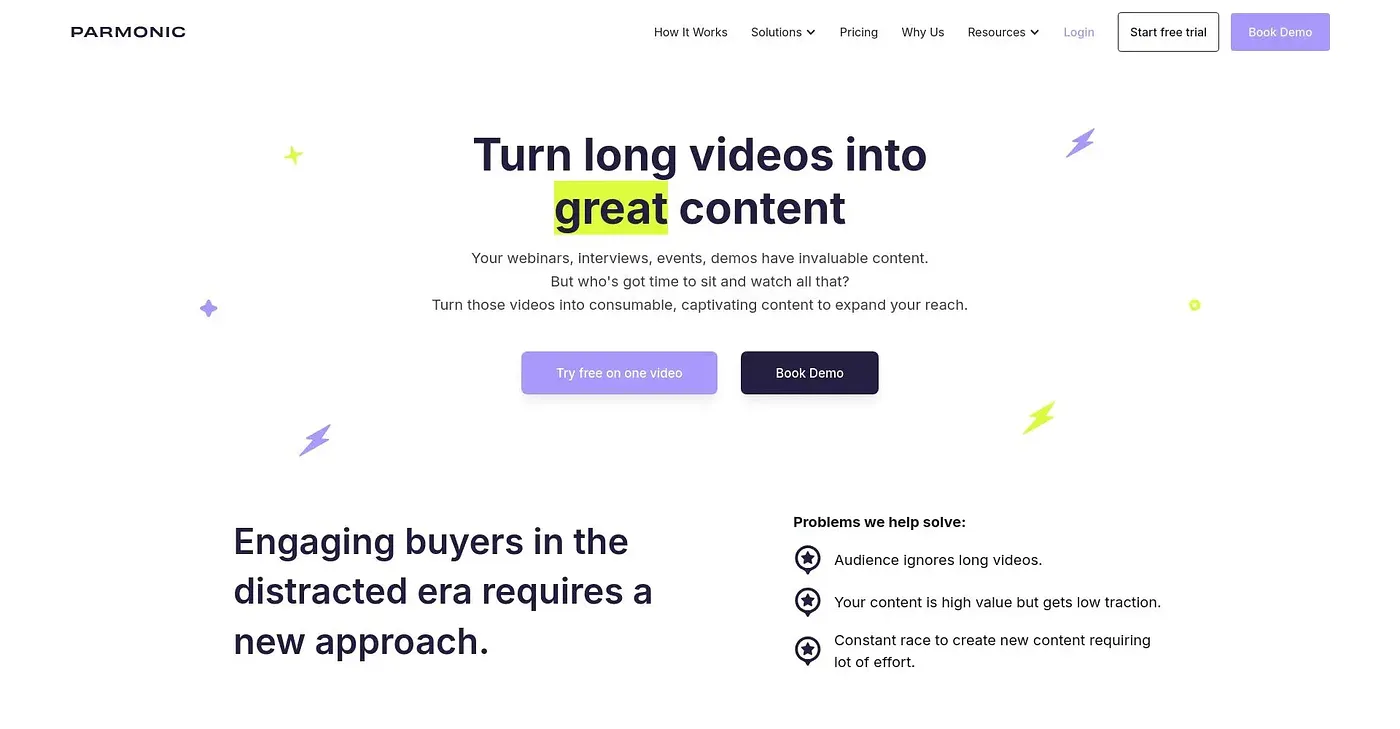
For marketing teams creating long videos, Parmonic streamlines content creation.
At a glance
3.8 out of 5
Scored by Alex after real useOur verdict
Parmonic transforms long video recordings into digestible content for lower costs. However, it's not ideal for short explainer videos with only music.
✓What it does well
✕Where it falls short
Key features
Questions about Parmonic
What does Parmonic do?
Parmonic turns long video recordings into digestible content by automatically breaking them into key moments. It also creates audiograms for social media, adds subtitles in multiple languages, removes filler words and improves audio quality. Toolio lists it as best for marketing and training teams.
How much does Parmonic cost?
Parmonic starts from $599 per month, according to the vendor's published pricing, and there is no free tier. Advanced and Enterprise plans are priced on contact, and the reviewer notes that advanced plans require costly custom MSA agreements.
Does Parmonic work for short videos?
Not well. The reviewer says Parmonic does not work well with short explainer videos without sound, and Toolio marks it as not for that kind of project. It is built for long recordings, which it breaks into key moments and audio-only clips.
How does Toolio rate Parmonic?
Alex scored Parmonic 3.8 out of 5 after real use, on 4 Oct 2026. The reviewer credits its AI-driven moment creation, tailored outputs for different platforms and advanced editing, but notes that it charges extra for unlimited processing of longer video content.
What are some alternatives to Parmonic?
Toolio lists Muku AI, Waymark, CinePacks and Pixellot as alternatives to Parmonic. Muku AI turns product URLs into UGC video ads, Waymark helps sales teams craft spec ads fast, and Pixellot automatically live-streams sports games without staff.