
UncovAI
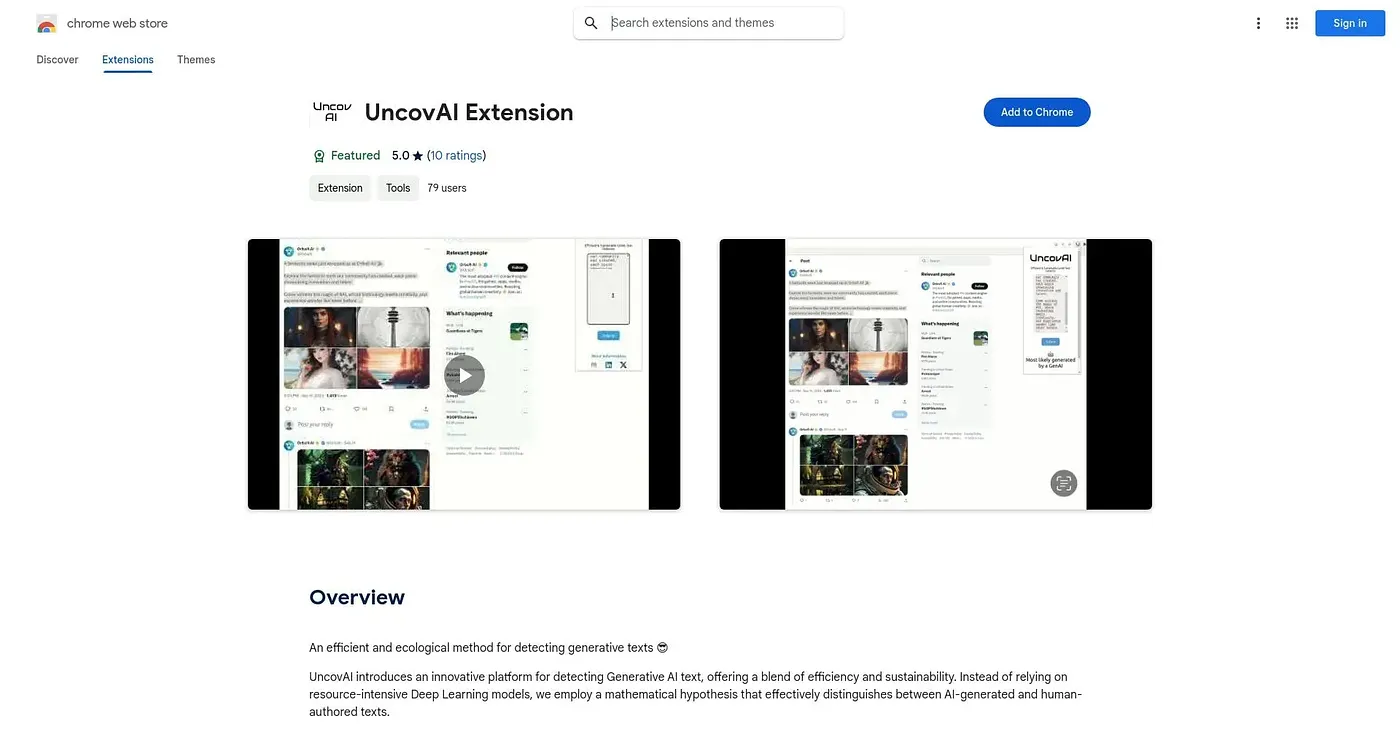
A Chrome extension that flags AI-written text using a lightweight mathematical method instead of heavy deep-learning models.
At a glance
3.9 out of 5
Scored by Alex after real useOur verdict
UncovAI checks text for AI authorship using a mathematical hypothesis rather than a full deep-learning model, which keeps detection fast and light on resources. That approach suits anyone who wants a quick read on a Chrome page without waiting on a heavy scan. It skips the nuance of larger detection models, so scalability and edge-case accuracy trail more resource-intensive tools.
✓What it does well
✕Where it falls short
Key features
Questions about UncovAI
How does UncovAI detect AI-written text?
UncovAI is a Chrome extension that flags AI-generated text using a mathematical hypothesis rather than a trained deep-learning network. The reviewer says this keeps detection fast and light on resources, and it distinguishes AI-generated text from human-authored writing directly inside the browser.
Is UncovAI free?
UncovAI is listed as free, with a free tier and a price of $0. The vendor's site is offline, so Toolio found no current price, and no paid plan is listed. It runs as an extension inside Chrome.
Who is UncovAI for?
Toolio lists UncovAI as best for users wanting fast, low-resource AI text detection, such as a quick read on a Chrome page without waiting on a heavy scan. It is not for teams needing nuanced deep-learning analysis or support outside Chrome.
What are the weaknesses of UncovAI?
The reviewer notes that UncovAI works only as a Chrome extension and lacks the deeper analysis of heavier deep-learning detectors. Its simpler method is also not built to scale for high-volume use, so scalability and edge-case accuracy trail more resource-intensive tools.
Is UncovAI energy efficient?
The reviewer says UncovAI's lighter mathematical method uses less processing power, which keeps its environmental footprint down. Skipping deep learning also cuts computational overhead, so scans return quickly. Alex scored it 3.9 out of 5 on 3 Oct 2026 after real use.