
Dewey Chrome Extension
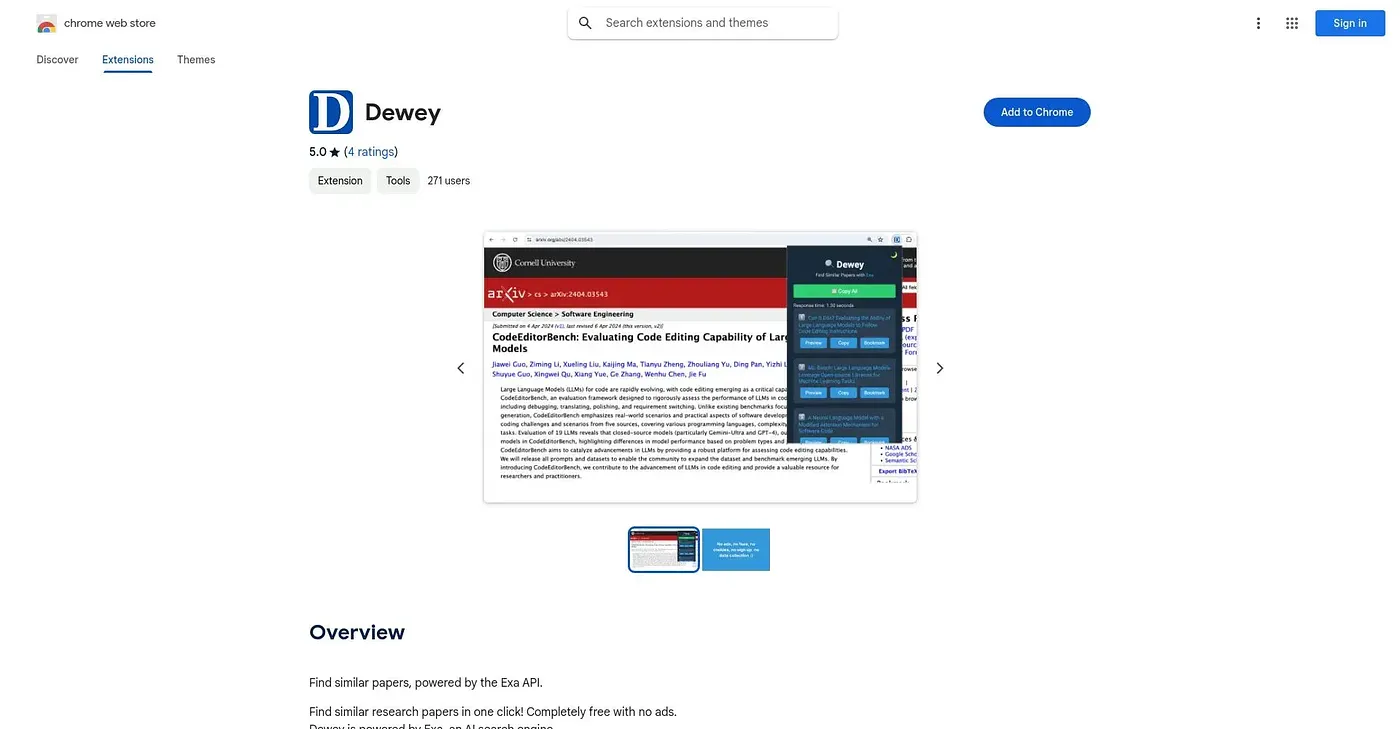
Finds academic papers similar to a given topic using the Exa API, then maps citations visually.
At a glance
Starts at
Free
The vendor's site is offline, so no current price was found.
Free tier
Yes
Platforms
Chrome
Best for
Researchers doing literature reviews across many papers
Not for
Researchers needing exhaustive coverage of niche papers
3.9 out of 5
Scored by Alex after real useOur verdict
Dewey uses the Exa API to surface academic papers similar in topic, methodology or results, then lets researchers narrow results by keyword, year or citation count. A visual dashboard turns those connections into citation graphs and thematic clusters that are easier to scan than a plain list. Algorithmic matching occasionally throws in irrelevant results and can pass over less-cited but still valuable papers, so a literature review built entirely on it needs a manual check.
✓What it does well
Similarity-based paper searchIt scans large paper databases and surfaces work similar in topic, method or results.
Filterable search parametersResults can be narrowed by keyword, publication year or citation count.
Visual citation mappingA dashboard turns citation relationships into graphs and thematic clusters.
✕Where it falls short
Occasional irrelevant matchesAlgorithmic suggestions can turn up results that are not actually relevant to the topic.
Can miss niche papersLess popular but valuable papers can slip past the algorithm, so coverage stays incomplete for niche topics.
Chrome onlyIt only runs as a Chrome extension, without a standalone app or other browser support.
Key features
Exa-powered similarity searchIt uses the Exa API to find papers related by topic or methodology.
Keyword and citation filtersUsers can filter by keyword, publication year and citation count.
Citation graphsIt visualizes relationships between papers as interactive citation graphs.
Thematic clusteringRelated papers get grouped into thematic clusters for easier scanning.