

Metaflow
DevOps
3.9
/5
Toolio reviewer
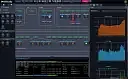
An open-source Python framework for building and deploying real-world ML workflows at scale.
HONEST REVIEWS. REAL EXPERIENCE.
Find the tool, and find out what it is bad at
Every tool is opened and used by a Toolio reviewer, who scores it and writes the honest pros, cons and a clear verdict. No hype, no fluff.
Tick Compare on any two to four cards to put them side by side.
An open-source Python framework for building and deploying real-world ML workflows at scale.
Focus on ML, not infrastructure.
Delivers unparalleled inference capability.
Suits engineering leaders; not for those looking to manage projects.
AI employees automate tasks across your tools.
Kubernetes GUI for managing multiple clusters.
K8sGPT automates Kubernetes management with AI.
Capture bugs, feedback, and ideas in one Jam that keeps the moment and available technical context together for teammates or agents.
Boost merchandising teams 10x faster.
IDB CRUD simplifies IndexedDB management with an intuitive drawer interface.
Helicone suits teams building AI apps and APIs, not those just starting.
FlowRL is for businesses wanting to maximize revenue with AI, but requires significant data.
Continuous API penetration testing with AI-driven risk discovery.
Java developers in large enterprises should use it, others might find better fits.
Suits teams with fast-moving codebases; may not be ideal for static documentation needs.
CryptoDo simplifies smart contract creation with a visual builder, but it's limited to multichain projects and lacks detailed customization.
Charm turns your terminal into a glamorous coding space.
Describe a task and Bytebot boots a fresh, sandboxed computer to complete work across multiple apps by clicking and typing through the UI.
Open-source AI gateway, tracks and caps LLM spend.
Builds test cases from your own clicks and flags when app changes break existing tests.
Applitools is great for automated visual testing but not ideal for simple smoke tests.
Distribute AI workloads across clouds and GPUs.
AI detector for precise text checking. Less than 0.5% false positives.
Tracks student progress, supports academic and personal growth.
Turns a recorded browser session into Cypress test scripts using OpenAI.
Orchestrates AI workloads across global GPU pools.
R.test is an AI-powered diagnostic test platform for SAT & ACT practice. Provides quick assessments and detailed insights.
Generate unique AI garden designs instantly. Great for design inspiration.
It suits any company needing desktop automation but is bad for simple tasks that don’t require a full virtual environment.
Convert hand-drawn diagrams into digital schemes with AI-powered recognition.
Scales AI agents but can be complex to set up and manage. It deploys governed AI agents at scale.
Building a cognitive computer with perfect context.
GPUX AI launches V2 with sub-1-second cold start times, perfect for serverless inference and GPU runs.
Accelerate DynamoDB workflow with a GUI client.
Dev Dynamics AI measures engineering metrics.
Reactive backend for apps and agents.
AI analyzes code, reducing noise and speeding up security reviews.
Nightly summaries of AI regulation and compliance news, but lacks deep analysis.
Best AI detector for accurate results.
Not ideal for absolute beginners or those needing a foolproof solution.
AI tool for content risk assessment.
UXsniff detects UX changes automatically.
Free to start, but limits apply.
Three worth starting with
Terms to know
DevOps tools cover the work between writing code and keeping it running: deploying, monitoring, managing containers and cloud workloads. Listings here include K8sStudio for Kubernetes and Autobot AI for workflow automation, alongside some general browser utilities. Look at which part of the pipeline a tool touches and whether it needs write access to production systems.
They can explain cluster state, suggest commands and draft configuration, which helps with debugging. Letting an AI apply changes directly to production is a bigger step. Most teams keep a human approval step and review generated manifests before they run.
Common uses are writing and explaining pipeline files, reading logs, summarising incidents and drafting runbooks. The tools save time on repetitive text and configuration, but they do not know your environment, so every suggested command still needs checking.
DevOps is about delivering and operating software reliably. Network security focuses on protecting systems from attack, and API development on building the interfaces between services. The three overlap in practice, especially around secrets and access control.