K8sGPT
DevOps
3.9
/5
Toolio reviewer
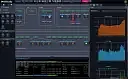
K8sGPT automates Kubernetes management with AI.
Browse by the job,
not the category
Most people arrive knowing what they need done, not which category it lives in. 65 jobs grouped into 12 kinds of work. Pick the kind on the left, or search.
Tick Compare on any two to four cards to put them side by side.
K8sGPT automates Kubernetes management with AI.
Kubernetes GUI for managing multiple clusters.
Runs AI workloads locally but lacks built-in Kubernetes management.
Adds AI code generation, review and Jira ticket drafting across the DevOps cycle.
An open-source Python framework for building and deploying real-world ML workflows at scale.
Join us to help ensure AI wins for democracy. Challenges we face are redesigning compute infrastructure and deploying gigawatts of solar.
Experiment, train, deploy with one platform. Go from idea to production without replatforming.
Scales AI agents but can be complex to set up and manage. It deploys governed AI agents at scale.
Delivers unparalleled inference capability.
Chhaya AI offers a free demo to help understand AWS Cloud Practitioner concepts.
Achieve near zero false positives with over 99% defect detection accuracy, deploy in just a few days.
Monitor uptime, performance, and incidents.
GPUX AI launches V2 with sub-1-second cold start times, perfect for serverless inference and GPU runs.
Improves Tet by identifying poor data usage.
Free to self-host, but lacks hosted option.
Run AI in one line of code. Simple, fast, and stable.
TechBot enhances doc search with natural language queries but works only on specific tech stacks.
Distribute AI workloads across clouds and GPUs.
Specialized language models for real-world business decisions. All data stays in Europe.
Enables AI and autonomy in various industries.
Rent GPUs for AI and ML at real-time, transparent prices.
Charm turns your terminal into a glamorous coding space.
Manage AI prompts with version control and testing.
Orchestrates AI workloads across global GPU pools.
DSH is a plugin framework that allows teams to build their own agent runtime, but lacks API stability and can't handle production deployments.
StackRef is great for those needing direct, experienced help with cloud environments; not ideal for complex managed services.
Run AI with an API. Deploy custom models.
Suits engineering leaders; not for those looking to manage projects.
wAnywhere monitors and enhances productivity with AI-powered tools for attendance, time tracking, and security. It helps streamline processes but may not be ideal for small teams or those preferring a simpler solution.
All Quiet streamlines on-call management and incident response for engineering teams.
Too rigid for manual workflows.
A token-powered marketplace connecting AI developers with GPU compute, backed by its own data centre.
Open-source AI gateway, tracks and caps LLM spend.
It suits cloud architects needing direct, expert help with design and security.
Adds one-click buttons that post pipeline-trigger comments on GitHub pull requests.
Generates test ideas from a webpage's elements, then turns them into ready-to-run automation scripts.
Automates code reviews with AI, saving time and improving quality.
Helps deploy smart contracts and write code tied into the Theta network's cloud tools.
Lets teams code, prototype, and deploy AI models together, entirely from the browser.
Java developers in large enterprises should use it, others might find better fits.
Unified platform for app and AI testing.
This tool warns of resource exhaustion and unresponsive servers.
UXsniff detects UX changes automatically.
IDB CRUD simplifies IndexedDB management with an intuitive drawer interface.
Puts a sidebar of R&D tools, GPT-4 and Midjourney access into one internal browser panel.
Smarter Testing, Faster Deployments
For coding agents to deploy in their native language, with Vercel's API and CLI. Deploy now.
Runs a white-labeled AI system on a private company server, built on Google's Vertex AI.
Infrastructure, deployment and monitoring.
DevOps engineers run infrastructure, automate deployments, watch systems and respond when something breaks. AI tools fit different parts of that loop: Kubernetes help (K8sGPT, K8sStudio), hosting and deployment platforms (Vercel, Runpod), test automation (testRigor, Applitools) and LLM traffic monitoring (Helicone). Check how much access a tool needs to your cluster or logs, and what it can change without approval.
It can scan cluster state, explain error messages and suggest likely causes, which K8sGPT is built for. Treat suggestions as hypotheses. Read the proposed fix, check it against your configuration, and avoid giving a tool write access to production resources.
Limit permissions to read-only wherever possible, log every action, and require human approval for changes. Check where logs and configuration are sent, since they may contain secrets, tokens or customer data that should not leave your environment.
Normal monitoring tracks servers, uptime and errors. LLM observability, as offered by tools like Helicone, records prompts, responses, latency and token usage for model calls. If your product calls an AI API, you probably need both to debug slow or incorrect responses.